PointX

Multi-View Consistent Intrinsics by Querying Surface Points

Miguel Farinha1,2* Sam Sartor1 Iliyan Georgiev1 Giuseppe Vecchio1 Ronald Clark2 Michael Fischer1

1Adobe Research2University of Oxford

*Work done during an internship at Adobe Research

TL;DRPointX predicts albedo, irradiance, roughness, metallicity and normals once per 3D surface point. The prediction belongs to the point, not to a pixel, so it is consistent across views by construction.

Input video
Drag to orbit · scroll to zoom · click a point to see its track
–
Loading the scene…

One PointX query per 3D point.

Abstract

The appearance of a scene is determined by the albedo, roughness, metallicity and normal of every point on its surface, and by the light that reaches it, its irradiance. Recovering these intrinsics from images is ambiguous, and methods that predict them per pixel give the same surface point a different decomposition in every view. We introduce PointX, a simple feed-forward model that predicts intrinsics per 3D surface point instead. A multi-view transformer encodes a set of unposed images, and for any queried surface point, PointX pools the point's tokens across the views in which it appears and decodes the point's intrinsics once. Each point of a 3D reconstruction of the scene, such as a point cloud or a mesh, thus receives a single prediction, which is exactly consistent across views by construction and enables view-consistent relighting and editing. The same model also predicts per-view maps, from one image or many, by querying the point seen at every pixel. These maps agree across views up to the precision of the estimated geometry and correspondences. PointX is significantly more consistent than existing methods, while remaining competitive in accuracy from a single image and improving as views are added.
Results

Steady over time

Real videos from DL3DV, every method in its video mode, nothing filtered in time. Every map of every method plays side by side; switch to the slider to compare PointX with one baseline under a divider.

One answer per surface point

With the geometry of a scene given, its surface points can be queried directly. Per-view methods must average maps that disagree, which leaves seams on the surface. PointX decodes each point once. Drag the divider; orbit the scene.

PointX (Ours)
Drag the handle to move the divider · drag elsewhere to orbit · scroll to zoom
Loading the scene…

Surface points of rendered scenes that appear in at least two input views. Per-view methods take the mean of their maps over those views. Dark grey: no ground truth.

The same point, the same answer

Two photographs of a real scene, with only the images given. Drag the divider to wipe both views from photograph to map, and move over either view: the laser scan marks the same surface point in the other, with the value each method gives it in the two.

ETH3D photographs with laser-scanned geometry, used here only to find corresponding points. PointX with RoMa-Ω tracks; the video and multi-view baselines process the views jointly. Normals of view 2 are shown in the camera frame of view 1, and its irradiance at the exposure of view 1.

Method

Predict the point, not the pixel

Intrinsics are properties of surface points, so the surface point is the unit of prediction. A query names a 3D point; every view in which it appears contributes one token; the point is decoded once.

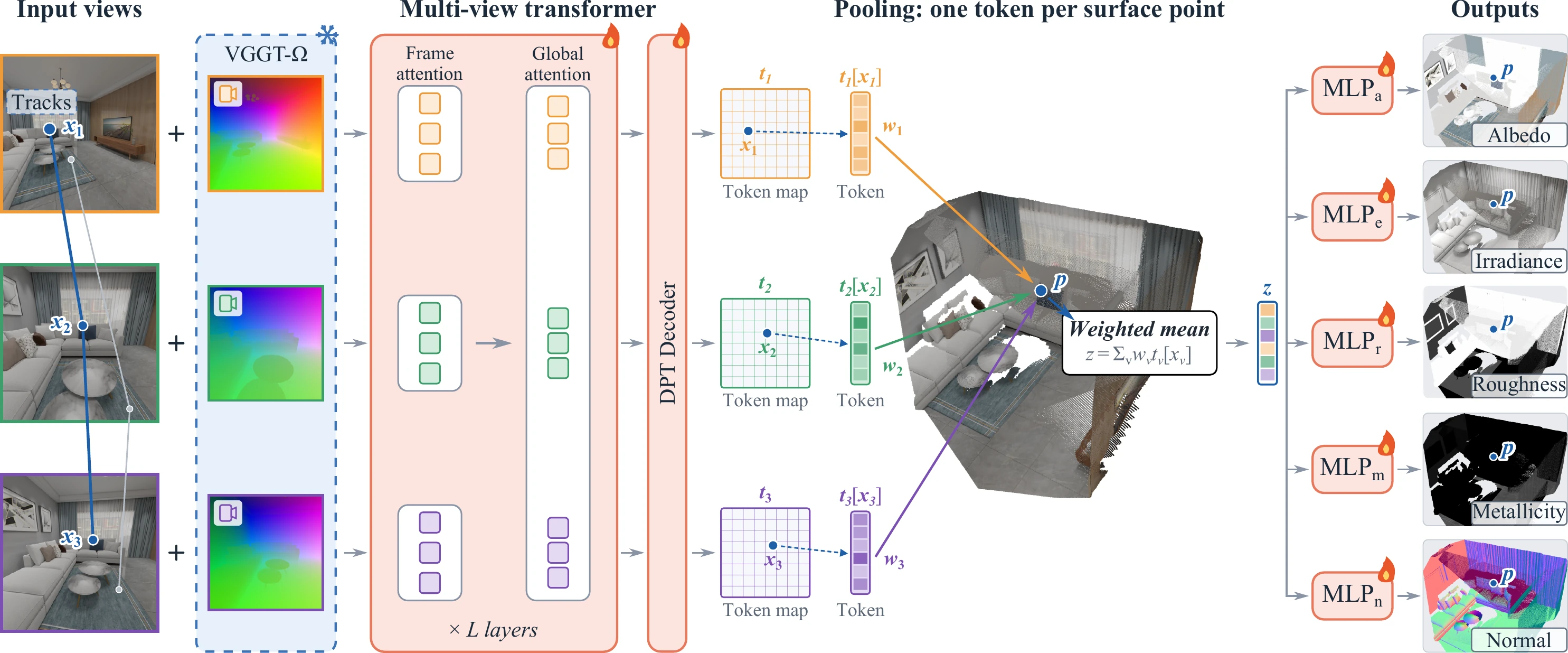
PointX overview. Three input views and the geometry estimated by a frozen VGGT-Omega enter a multi-view transformer with frame and global attention; a DPT decoder gives one token map per view. For a queried surface point p, the tokens at its locations in the three views are combined by a confidence-weighted mean into a single token z, from which five small MLPs decode albedo, irradiance, roughness, metallicity and normal.
A multi-view transformer, conditioned on the geometry estimated by a frozen VGGT-Ω, turns each view v into a token map tv. For a queried surface point p, the tokens at its locations xv in the views are pooled into a single token z by a confidence-weighted mean, and one MLP per property decodes the point's intrinsics from z.
01

Locate the point in the views

The track of a point p is where it projects in each view. Projection also lands where p is hidden, so each location carries a confidence that p is visible there, from the distance between p and the surface that view images at that pixel.

cv=11+δv/τ,δv=‖Xv[xv]−p‖dv

Cameras and depth come from a frozen reconstruction model, a scan, or any other source. A dense matcher can supply the track instead.

02

Pool one token per view

Every view contributes the token at its location on the track, and the tokens are averaged with their confidences as weights. Occluded views count for little. The weights have no learned parameters and no view is the reference.

z=∑vwvtv[xv],wv=cv∑ucu

The pooled token depends only on the point, the geometry and the images, not on the view that asks.

03

Decode the point once

Five small MLPs read albedo, irradiance, roughness, metallicity and the normal from the pooled token. The answer belongs to the point: its disagreement across views is zero by construction, with no consistency loss and no fusion of per-view predictions.

Querying the points of a point cloud or the texels of a mesh puts intrinsics directly on that representation. Querying the point seen at every pixel gives per-view maps, from one image or many.

Benchmarks

Accurate and consistent

Per-view predictions trade accuracy against agreement between views. Decoding each surface point once removes the trade: PointX is the most consistent method and stays among the most accurate.

Each point is a method: the accuracy of its per-view maps against how much two views of a real scene disagree. Single-view methods are scored from one image, video and multi-view methods from several. † Trained on the Hypersim test scenes.

More views, more accurate

Error of a view on InteriorVerse as more views of its scene are given. Most of the gain remains without pooling: it comes from the multi-view transformer.

Applications

Relight it, edit it, once

One set of intrinsics per surface point attaches directly to a 3D representation, with no per-view maps to fuse. A light placed once or a material edited once changes every view consistently. Below, a bulb is hung in ETH3D scenes and the photographs are relit by it: pick a light and a view, and drag the divider between the photograph and its relit version.

Path traced in Blender, with every predicted map. The surface point at each pixel is queried once, from all the views in which it appears. The bulb is placed once in 3D and its light is path traced in Cycles on a surface that carries PointX's albedo, roughness, metallicity and normals as a standard physically based material, so it casts shadows, leaves highlights and bounces between surfaces.

The same edit in every photograph

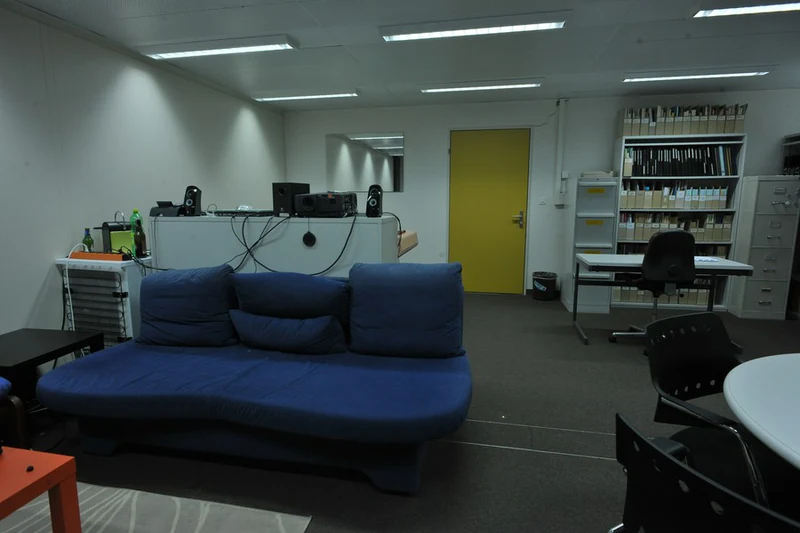
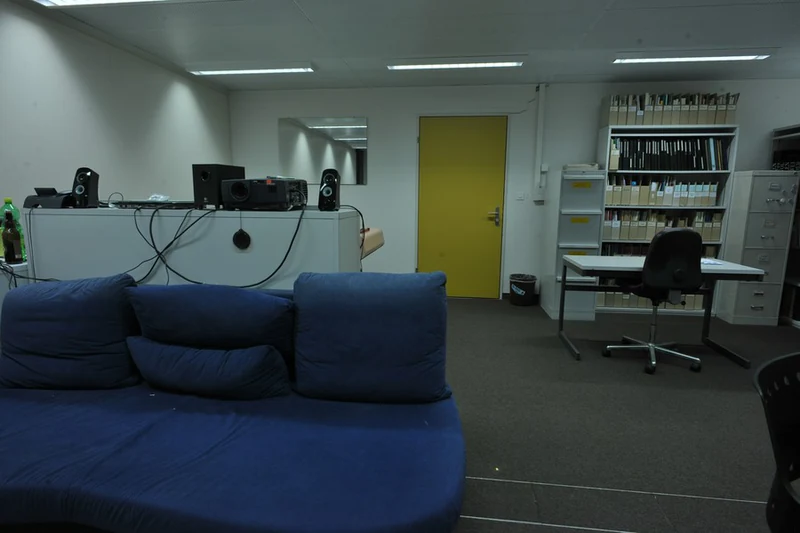
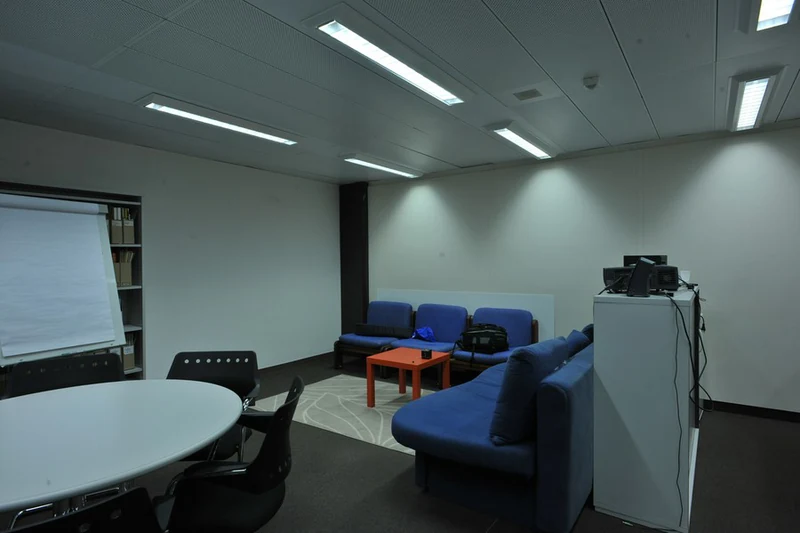
First view of an office with a blue sofa Second view of the office Third view of the office
Every point of the laser scan of an ETH3D scene is queried once. A new light or an albedo edit is applied to the points and carried into each photograph, so the three views change together.

Textures for a mesh

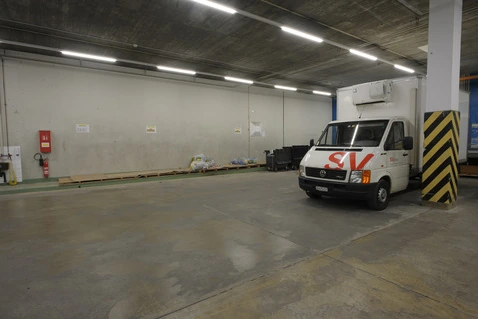
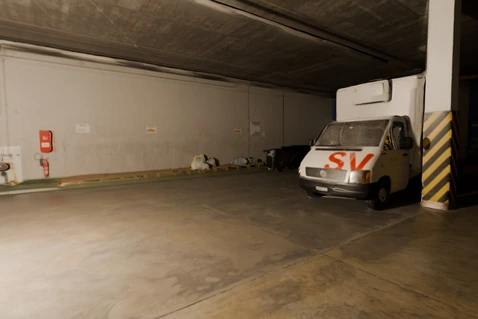
A photograph of a garage with a parked vanInput
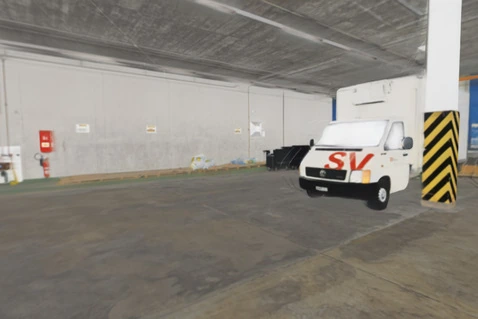
The mesh of the garage textured with the predicted albedoAlbedo texture
The textured mesh path-traced under a new lightRelit
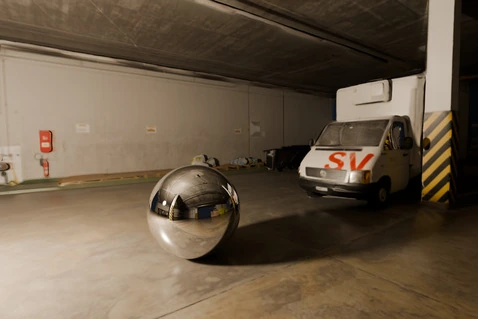
A chrome ball inserted in the scene reflects the textured meshObject insertion
Querying one point per texel bakes the predictions into a mesh's textures: a standard asset for physically based rendering. A path tracer relights it, and an inserted chrome ball reflects the textured scene.

Citation

BibTeX

@article{farinha2026pointx,
  title   = {PointX: Multi-View Consistent Intrinsics by Querying Surface Points},
  author  = {Farinha, Miguel and Sartor, Sam and Georgiev, Iliyan and
             Vecchio, Giuseppe and Clark, Ronald and Fischer, Michael},
  journal = {arXiv preprint arXiv:2611.33157},
  year    = {2026}
}